Whose freedom is it anyway?
Artificial Intelligence and the old promise of the emancipatory machine, from the washing machine, the personal computer, the internet, and social media.

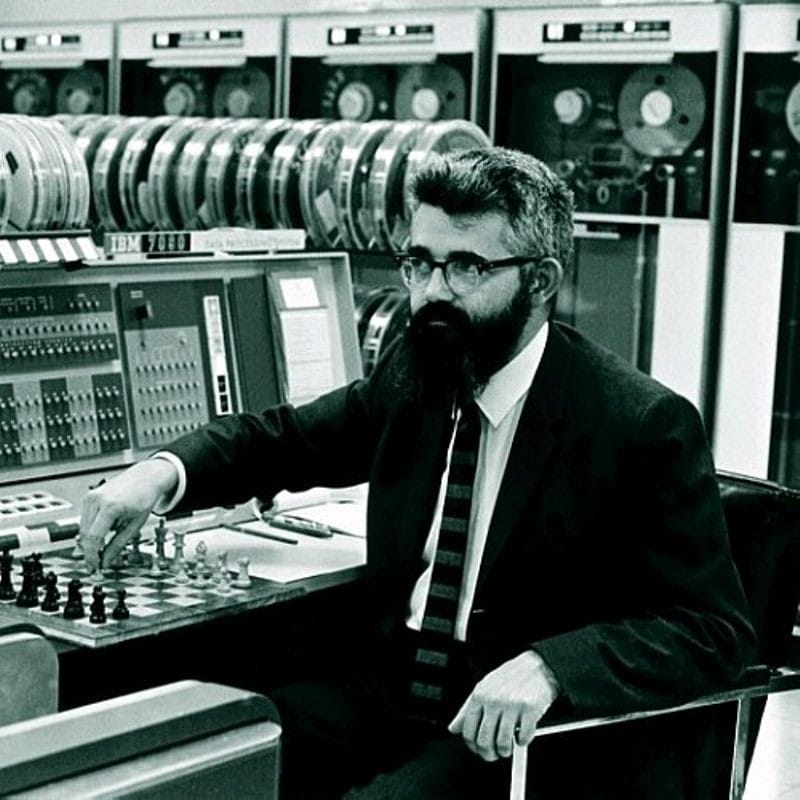
In the summer of 1955, John McCarthy sat down to write a funding proposal. He wanted the Rockefeller Foundation to pay for a workshop at Dartmouth the following year, and the field he hoped the workshop would inaugurate did not yet have a name. The obvious candidates were compromised. He had already co-edited a volume called Automata Studies and has been disappointed by the papers the title attracted. Cybernetics was taken, and came attached to Norbert Wiener, with whom, McCarthy admitted years later, he preferred not to argue. So he coined something new: artificial intelligence.
A decade after the proposal, Joseph Weizenbaum built a program at MIT called ELIZA, a few hundred lines of code that imitated a psychotherapist by rearranging a person's statements into questions. It understood nothing, and Weizenbaum knew that, because he had written every line. His secretary had watched him write them. That didn't stop her from asking him at one point to leave the room so she could talk to ELIZA in private. Weizenbaum spent much of the rest of his career trying to explain why that moment alarmed him, most fully in Computer Power and Human Reason in 1976.
John McCarthy conceded, years later, that nobody involved could define intelligence in a way that cleanly separated what the machines did from what they didn't. The phrase ‘artificial intelligence’ was a bid, addressed to a funder, and it worked so well that seventy years on it organizes hundreds of billions of dollars, several national industrial strategies, and the daily speech of millions of people who have never heard of the Dartmouth workshop, or John McCarthy.
The appropriating vocabulary of technology has a long history. It is useful, because it performs a specific job. It has a purpose. We still talk about horsepower when we want to measure how powerful cars are. A workhorse is a reliable machine performing demanding tasks. If your laptop has top-of-the-line specs it is probably a beast. The machine sees; more precisely, a statistical function maps pixels to labels, but "computer vision" was easier to fund. The machine learns; more precisely, it compresses the recorded work of millions of people into a set of weights, but learning sounds like education, and education is not something you owe the textbook's authors for. The machine hallucinates; more precisely, the product is defective, but a defective product owes you a refund, while a mind that hallucinates asks for your patience. You feed data to a system, the system ingests data. A resource-hungry system consumes resources and digests information. AI is data-hungry and starved for compute. Neural, memory, reasoning, understanding: each borrowed word moves the object a little further out of the category of things machinistic, and a little further into the category of beings. The opposite, of course, has formed as well. Every era has described the mind in the image of its proudest machinery: hydraulic humours, clockwork, automaton, engine of reason... Now it is we who process, who lack bandwidth, who are hardwired, who need to reboot.
None of this would matter much if words were ornaments. But they are not, because words often become verdicts a priori. They settle quietly, before any argument has been made about ownership, accountability and liability. Which is to say, in our topic of technology and language, every technology poses two questions: who gets to define it, and who gets to use it. The first question (who gets to define it) is settled in funding proposals and product names and press releases, and the people who settle it are the same people who own the machines. The rest of us then (usually the ‘who’ in the ‘who gets to use it’) conduct the argument about use inside specific and narrow definitions. Presiding over the whole vocabulary is its largest and most profitable word, the one the industry cannot get through a paragraph without; Freedom. The tools, we are told, will make us free.
Whether that specific promise of freedom means anything of substance depends on the actual meaning of freedom as a concept, and freedom turns out to be one of the most contested definitions in history. Its standard form comes from Isaiah Berlin in 1958. Negative freedom is the absence of interference: nobody stops you from doing a thing and so you carry on to do that thing. Positive freedom is the presence of capacity: you are actually able to lead the life you want, within reasonable constraints. Anglophone political culture, American culture above all, settled on the first (negative freedom) and let the second (positive freedom) fall into disuse. In that absence, freedom came to mean, almost by reflex, 'freedom from'.
The historian Timothy Snyder, gives an account of this from the war on Ukraine. Drive the occupier out of a village and its people are, in the negative sense, free; nobody now prevents anything. But if there is no water, no passable road, no clinic and no school, nobody there is free in the full sense of the word. The medical staff who reached the concentration camps in 1945 reported the same thing in plain terms: opening the gates liberated no one. Months of care did. Freedom, then, is a set of conditions. It has to be built. It can only be built by people acting together. It is positive because it finally concerns what you would do and the things you actually care for, rather than the list of things nobody happened to prevent you from doing.
When David Graeber and David Wengrow did their research for The Dawn of Everything, they came to the conclusion that across most of human history freedom has meant three practical things: the freedom to move away, the freedom to refuse orders, and the freedom to remake the arrangements one lives under. Every one of these depends on conditions:
- You can leave only if somewhere else will receive you (the most basic form of freedom), which for most of history it was guaranteed by complex customs of hospitality. Early European settlers were astonished that colonists sometimes left European settlements to live among Indigenous peoples, while the reverse almost never happened.
- You can refuse orders only if refusal will not be used against you. Decisions in a village often required lengthy discussion until consensus emerged. Authority existed, but it was situational and negotiable. A war leader could organize a military expedition. But outside the expedition, they had no authority over the everyday life of their crew.
- Remaking the arrangements one lives under is something no person can do alone, because a social form only exists if others agree to live inside it, and it becomes thinkable only where leaving and refusing remain open. This is the third freedom which resting on the other two, is the most demanding of all. Several Indigenous societies alternated between different forms of organization during the year. For example: During the summer, hundreds or thousands gathered in large settlements with formal leadership, ceremonies, and coordinated hunting. During the winter, they dispersed into small egalitarian bands where hierarchy disappeared. During drought years organization might had different and stricter forms.
These accounts give us a way to test the promise of freedom. If freedom is a set of conditions, built by people acting together, then no object can deliver freedom on its own, however capable the object is. A machine arrives into a household, a workplace, with a set of relations already arranged in someone's favor, and the best it is capable of doing is to act on the arrangement it finds. So when a technology is sold as freedom, the machine itself tells you very little about the meaning of the concept. What matters is the conditions waiting for it: who has the machine, who lacks the machine, and who it actually serves. And there are plenty of examples to draw from history.

Through the early and middle decades of the last century, the washing machine was sold as a form of emancipation. Advertisements promised that the new electric appliances would release women from the worst of domestic labor. The boiling and scrubbing and wringing took whole days of the week. However the condition alone of having a working machine at home did not remove house labor. Across the decades in which washing machines, vacuum cleaners and refrigerators spread through ordinary homes, the hours women spent on housework stayed remarkably stable. The time-use studies Joann Vanek assembled in the 1970s found full-time housewives working around 52 hours a week in the mid-1920s and slightly more in the mid-1960s. This finding has been disputed by later researchers who found housework time did decline for some subgroups once better data controls were applied. The main story remains, that the standard of what counted as clean rose to meet the new capacity. The commercial laundries and the paid help (someone else's labor) fell away, and a great deal of work that had once been shared or sent out was quietly returned to a single person at home.
The promise had been liberation, but instead, what arrived was a specific rearrangement. Whether it felt like freedom depended almost entirely on your gender and class. A household with money met the machine very differently from the woman who now did everything alone, and to a higher standard than what a laundress had once been paid to do. The machine changed nobody's conditions. On the contrary, it landed on the conditions already in place and amplified them. Liberation was marketing speak, chosen by the people selling the appliance. The people living with it were never asked what they felt, they were only invited to pay for it.
Nuclear power was to make electricity "too cheap to meter", in the 1954 words of the chairman of the US Atomic Energy Commission. The personal computer arrived under the banner of computer liberation (Ted Nelson's phrase from 1974). It was the people's machine against the corporate mainframe. The internet was declared independent of every government on earth in 1996, in a manifesto written, of all places, at Davos. Social media was credited for the uprisings of 2011 and briefly renamed liberation technology by a few. The gig platforms of the 2010s sold freedom as being your own boss, one ride at a time. Cryptocurrency promised to free money itself, and the unbanked along with it. Each was announced as emancipation from some drudgery or some gatekeeper. Each settled, within a decade or two, into a familiar shape: owned by few, worked by many, and marketed in the language of freedom.
The pattern would be easier to resist if the promise of freedom was ever simply false. Each technology on that list did release somebody from something. The personal computer did put publishing into ordinary hands, and the social media platforms did, for a few years, carry news past state censors. The promise persuades because it begins from real experiences of a few people, and then extends those experiences on the assumption that they are everyone else’s experiences, with no evidence at all. And because each technology arrives under a fresh name and with no memory attached, the extension can be performed again each time as though it had never failed before.
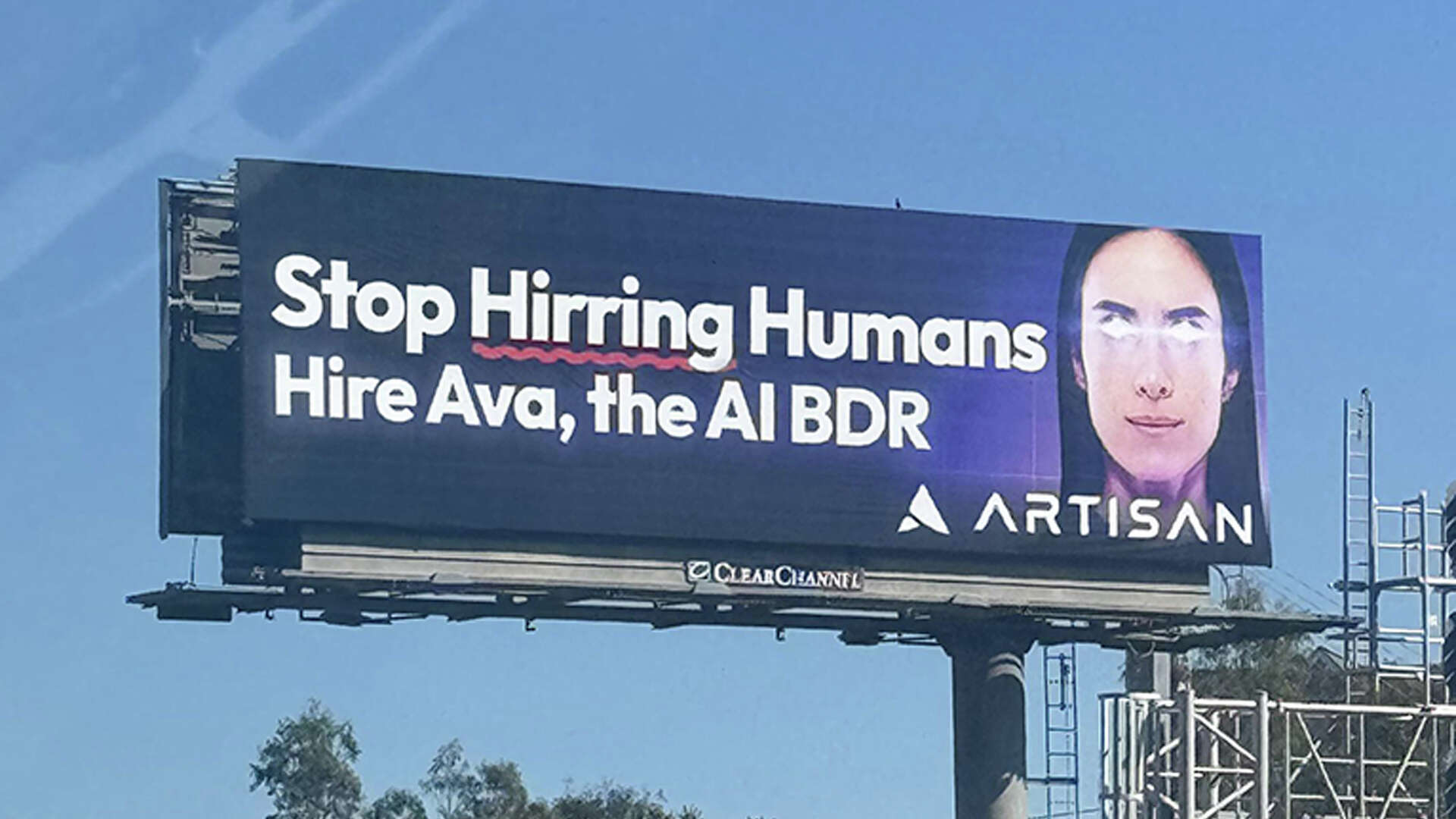
The same promise is now being traced when observing the hyping of artificial intelligence. The tools free us from the dull and the repetitive, the new advocates say. They hand the keys of creation to anyone willing to just ask for them. What these advocates share is easier to hear in a single piece of testimony disconnected from the real world. A person explains that some new tool has set them free. They used it to clear away the parts of the job they found tedious. They built something over a weekend that would once have taken a month, and they shipped it. From this, they reach a conclusion about everyone else: technology is liberating, and what freed them will free the rest of us in turn.
That story holds only if you overlook a great deal that the person sharing this story also often leaves out. For example, years of accumulated technical knowledge, hardware that costs more than some people would be able to afford, time that can be spent on experimenting rather than on survival. And beneath all of it, a degree of authority over one's own working day that most people who work for a living never see. The ‘freedom’ on display belongs to someone who already controlled the conditions of their labor. The tool did not hand them that control. It assumed they already had it.
Wherever one person has privilege over another, the one with less privilege has to work constantly to understand the one with more privilege, to anticipate the moods, read the preferences, learn what pleases and what provokes (interpretive labor in Graeber’s terms). The person with privilege is excused from the exercise. They can afford to know almost nothing about the lives conducted beneath them, because nothing in their day forces them to look. Inequality distributes imagination unevenly.
The person generalizing from their weekend revelation with AI is drawing on that exemption (in the form of privilege) without noticing. They reason outward from their own command of the situation, and arrive at a confident claim about people whose relation to the same tool does not resemble their own at all. They are not required to imagine them, and so they simply don't. A worker in a corporation, a hospital back office, a call centre, a school, does not choose the system. The employer chooses it, installs it on hardware the worker will never own or inspect, and presents its use as a condition of staying employed, in some version of "use this, or account for why your numbers have fallen". The same object that can enlarge someone's agency, contracts then someone else’s, based on their own conditions.
David Golumbia called this ideology "cyberlibertarianism". In the book he finished shortly before his death in 2023 he argued that the celebration of digital technology as inherently emancipating is a political programme presented as a neutral technical observation. This specific programme’s politics run consistently rightward even when the people repeating them do not think of themselves that way. The vocabulary gives it away. Freedom. Openness. Innovation. Disruption. Each word, in the advocate’s mouth, is conditioned with a practical demand, that the technology and its owners cannot be held accountable of any collective, democratic decision or critique. Golumbia called the resulting worldview "an incoherence in the service of power". It has no need to be consistent. It only needs to keep returning the same verdict that favors whoever already owns the infrastructure. Definition and ownership sit, as we see repeatedly throughout history, in the same hands.
One doesn’t need to be a libertarian to carry the ideology. A person can hold firm egalitarian commitments on housing, healthcare, labor, or who is allowed to cross a border, and then, the moment the subject turns to software, begin reciting the same marketing claims Elon Musk would make. Software is filed under a separate heading, a zone where the ordinary questions of who gains from and who decides about technology are suspended by agreement. This is Berlin's negative freedom pared down to its commercial minimum: freedom as the absence of anyone saying no.
If the technology were as self-evidently liberating as its advocates report, you would expect it to win on its merits. However, the standing to say no is being removed by design. Why a liberating technology would have that need? Why would a technology need to be absolved from critique? In December 2025 the government of the United States issued an executive order whose central purpose was to stop individual states from regulating artificial intelligence. It set up a litigation task-force inside the Department of Justice with the assigned job of suing states over their AI laws. It instructed that federal broadband money, funds meant to bring rural households online, to be withheld from states that declined to comply. It told federal regulators to find grounds for striking down state rules the administration had decided were "onerous". It arrived after an earlier, failed attempt to freeze all new state AI legislation for ten years, and alongside the same administration's stated view that the industry should not have to pay to use the copyrighted books and articles its models are trained on.
Why would a technology that liberates need a litigation task-force to stop states from regulating it? Why would something that frees people require federal money to be withheld from those who question it? Why would a tool sold as empowerment need its own advocates to lobby? A thing that delivers what it promises does not usually need this much law bent in its favor. These are not the manoeuvres of a technology that wins arguments. They are the manoeuvres of a project that has to remove the public's capacity to refuse it before it can proceed. A great deal of what reaches us as technical inevitability turns out, once the funding and the legislation are set side by side, to be a sequence of decisions about people: who is exempted from which law, whose property may be taken without payment, which tier of government is permitted to ask a question. All of this is defended by appeal to intention, to the good the technology will eventually do. But there is a principle in systems thinking that reads as a universal law: the purpose of a system is what it does. Intentions fall away, because at scale they change nothing.
So we look at what it does. It draws an enormous and rising amount of power. Data centers used roughly 415 terawatt-hours of electricity in 2024 and are on course to about double that by 2030, a quantity close to the entire annual electricity use of Japan. Through 2025 their demand grew by around 17 per cent, against roughly 3 per cent for global electricity demand as a whole. It draws water on a comparable scale, something near 800 billion litres in indirect consumption across American data centers in a single year. The money behind the build-out is not modest either, more than 400 billion dollars from five large technology firms in 2025, with larger figures already announced for this year. And at the base of it sits the cheap and extractive human labor that the story of effortless automation never includes: the people in lower-income countries paid under two dollars an hour to clean and label and filter the training data, some of them working through the most violent material on the internet so the finished product can come back ‘smooth’ and ‘clean’ to you and me.
Then there is what it does to the work itself, which follows the pattern the washing machine set. The work is not abolished, but rearranged. Hand the writing of documentation to a model and the human skill of writing documentation begins to weaken, because a skill that goes unpracticed decays. Stop recording the reasons behind a system's design, on the understanding that the model will regenerate it on request, and the memory of why anything was built in a specific manner begins to go, and with it the ability to change it on purpose. You see, a skill is a condition of freedom too. So is the recorded memory of why things were made the way they were. Strip both out of a workforce and you have not relieved it of drudgery; you have removed the conditions under which it could ever refuse anything. The capacity does not disappear when it leaves the worker. It moves to whoever owns the system. A workforce relieved of those capacities is easier to replace and cheaper to direct. None of this is incidental. At scale it is the whole of the effect.
Against all this, an advocate will reach for history. Photography did not kill painting. Image software did not kill illustration. New tools have absorbed older crafts before and left them room to continue in altered forms. When it comes to AI though, this deployment is faster by a wide margin, it is aimed at the whole breadth of knowledge work at once rather than at any single trade, and it comes during a period of flat wages and weakened labor protections. This leaves the people it displaces far less to fall back on than a displaced craftsman had a hundred years ago.
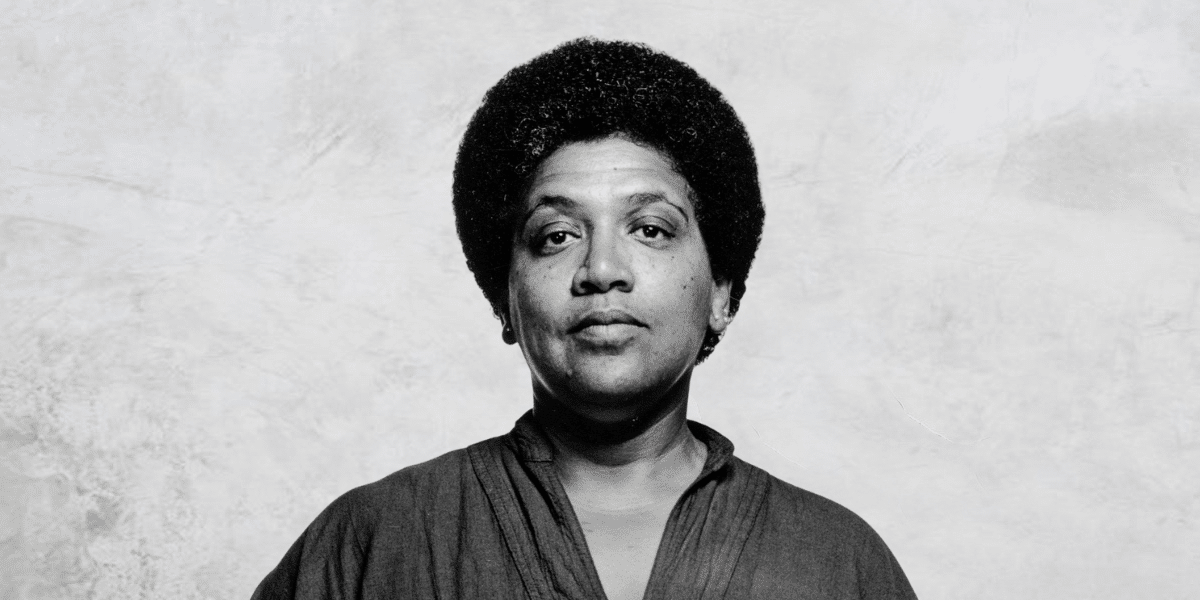
The clearest analysis on record was delivered in September 1979, when Audre Lorde spoke at a New York conference marking thirty years of Simone de Beauvoir's The Second Sex. Audre had been invited late, and said so from the platform; she was one of two Black women on the programme, both placed on a single panel. The conference had otherwise managed to examine the condition of women without reference to poor women, Black women, or lesbians. During that event she drew the sentence that has circulated ever since: the master's tools will never dismantle the master's house. The sentence is usually quoted as if it referred to hammers, but her argument was about frameworks. A movement that conducts all of its thinking inside the concepts of the order it opposes, she said, may win the occasional round of the master's game, but it will never build anything the master did not already have plans for. And she added an observation close in spirit to Graeber's: the excluded are kept permanently busy learning the master's concerns, while the master learns nothing of theirs.
If we set today's predicament beside Audre's speech, what is distributed under the banner of democratized AI is access to the master's tools in the simplest terms available: models owned by a handful of firms, run on hardware the same firms control, rented out by the token, metered, priced, controlled, deprecated and repriced at the owner's discretion. The space where the work happens is the master's. You are invited in on a subscription. A rentier-rentee relationship. And the vocabulary in which you are asked to evaluate the arrangement is supplied by the same master. Accept that the product is an intelligence, that ingesting your work is learning, that its failures are hallucinations, and that freedom means you are free from owning anything of all that. Every sentence available to you has been arranged in advance, so that refusal comes out sounding like superstition and fear of the future.
Lorde's counsel was not in despair. What she recommended was interdependence among the people the structure had no place for, treating difference as a resource rather than a threat, and building the capacities the house was never going to grant them. For the purpose of this essay, she was describing conditions, made cooperatively by the people who need them and answerable to no master.
The encouraging part of seeing this whole situation plainly is that inevitability was always the most fragile claim in the case (along the marketable notion of ‘freedom’) . Nothing here is a law of nature. Data centers are placed through planning decisions that can be fought, and in more than a few places have been fought and stopped. Models are trained on copyrighted work under a permission that is being contested in court right now. The exemptions the industry relies on were granted by people who can be lobbied, replaced, or voted out. A technology that needs this much political cover is a very very fragile technology.
Refusal, then, does more than say no to this technology. It makes room for a different question, the question of what we would build instead and for whom. The aim is not to bring down a specific company and call it finished, because the incentive that produced that company would simply produce the next one. The aim is to alter the conditions and to build the kinds of mutual support that make the worst of these tools redundant, because people are no longer desperate enough to reach for them. That is freedom in the positive sense. It is unglamorous and it needs lobbying, activism, and policy design... None of that can be generated on request. All of it has to be made together, communally, which is the one method the industry has no product for.
Which finally returns us, to who gets to use technology. An advocate hyping AI may have saved time while they used it, and their choises felt real. The error was never in the experience. It was in the transliteration from their experience to ours, the assumption that a preference revealed by a person who already held the knowledge, the hardware, the time, and the authority could stand in for the preferences of everyone else. Remove that, and what remains is the oldest and most easily forgotten fact about any of this. These are simply human arrangements. Particular people made them, in particular interests, through particular decisions. Arrangements assembled that way can be taken apart and assembled differently. The world the advocates describe is handed to us as the only one available. It is not. It is one settlement (among several that were always possible), presented as destiny so that we will stop searching for the rest.
Choosing otherwise begins, as boring as it sounds, with words. Call the model a product and its maker a manufacturer, and questions of liability come back into view. Call the training corpus what it is: other people's work, which is appropriated, and the question of compensation returns. Say plainly that a subscription to somebody else's machine is not a capacity of your own, and Lorde's words come back in their full force. Above all, reserve the word freedom for the thing itself: the built, shared conditions under which people can act on what they actually care for. Freedom has never once shipped as a feature in a technical product. It is made by people together or it is not made at all. The greatest historical lesson is that no social order is inevitable. The institutions we inhabit today are human creations, and therefore they can be remade, if we want it.